



Sildenafil 100 mg 20 tablets

Semax nasal drops 0.1% 3 ml

Prednisolone 5mg 100 tablets

Tamiflu 75 mg 10 capsules

Plaquenil 200 mg 60 tablets


Champix 1 mg 112 tablets

Ingavirin 90 mg 10 capsues


Ovestin 2 mg 30 tablets

Ovestin Vaginal cream 15g


Macmiror 200 mg 20 tablets


Ventolin nebula 20 ampoules

- Antibacterial medication
- Antifungal medication
- Antiviral Medication
- Cardiovascular medication
- different medication
- Hormonal medication
- Immunosuppressants and immunomodulating medications
- Nervous system
- Pain relievers and anti-inflammatory
- Respiratory system
- Treatment of diseases of the liver and gastrointestinal tract
- Treatment of sensory organs, eyesight and hearing
- Urogenital system


De-Nol 120mg 112 tablets

De-Nol 120mg 56 tablets

De-Nol 120mg 32 tablets

finasteride 5mg 30 tablets

Itrazole 100 mg 42 capsules

furasol 15 sachets of 100 mg

Triacort OINTMENT 0.1% 10G


Urseptia 200 mg 20 capsules


Minolexin 100 mg 20 capsules

Minolexin 50 mg 20 capsules


Immard 200 mg 30 tablets

Adenuric 120 mg 28 tablets



Mexicor 100 mg 20 capsules

Cogitum 10 ml 30 vials

Combilipen 30 tablets

Deprim 30 tablets

betaserc 24 mg 20 tablets

Memoplant 80 mg 30 tablets

Actovegin 200 mg 50 tablets

Piracetam 800 mg 30 tablets

Pronoran 50 mg 30 tablets

Selank 0.15% nasal drops

Memantine 10 mg 30 tablets


Baclosan 25 mg 50 tablets

tagista 16 mg 30 tablets

Sermion 10 mg 50 tablets


Ceraxon 500 mg/4 ml 5 vials

Cortexin 10 mg 10 vials

Cerebrolysin 10 ml 5 vials


Ceraxon 1000 mg/4 ml 5 vials

Afobazol 10 mg 60 tablets


Ginos 40 mg 30 tablets

Dobrokam 250 mg 30 tablets

Teraligen 5 mg 25 tablets
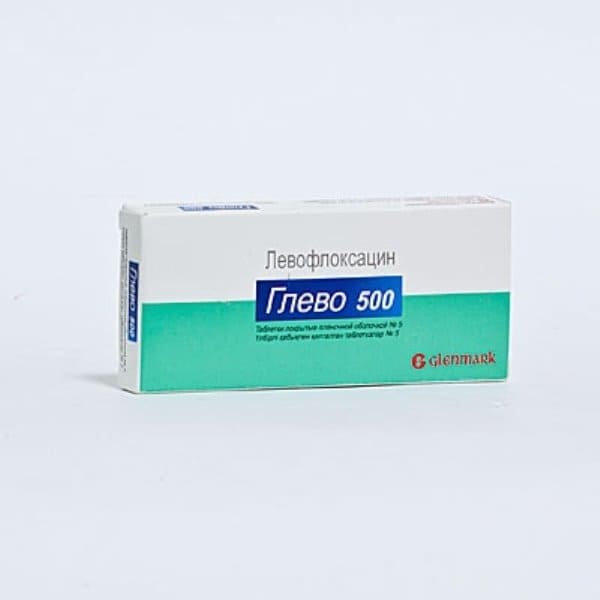
Glevo 500 mg 5 tablets

Manufacturer: Glenmark
Country of origin: India
General description: The antibacterial drug fluoroquinolone

Dosage form
Tablets, film-coated
Composition
levofloxacin (hemihydrate) \0009500 mg
Excipients: cellulose microcrystalline, povidone (K-30), crospovidone, magnesium stearate, cellulose microcrystalline (avicel рН101).
The film composition of the shell: hypromellose, macrogol (polyethylene glycol 6000), dibutyl phthalate, talc, titanium dioxide, colouring agent iron oxide red, dye iron oxide yellow.
Pharmacological action
antibacterial agent of the fluoroquinolone broad spectrum. Levofloxacin does DNK-girazu (topoisomerase II) and topoisomerase IV, violates supercoiling and cross-linking of DNA breaks, inhibits DNA synthesis, causes profound morphological changes in cytoplasm, cell walls and membranes of microorganisms.
The drug is active against aerobic gram-positive microorganisms: Corynebacterium diphtheriae, Enterococcus spp. (including Enterococcus faecalis), Listeria monocytogenes, Staphylococcus spp. (coagulase-negative, including methicillin-sensitive/methicillin-resistant-moderately susceptible strains), Staphylococcus aureus (methicillin-susceptible strains), Staphylococcus epidermidis (methicillin-susceptible strains), Streptococcus spp. groups C and G, Streptococcus agalactiae, Streptococcus pneumoniae (penicillin-sensitive/moderately sensitive/resistant strains), Streptococcus pyogenes, Streptococcus viridans (penicillin is moderately sensitive/resistant strains); aerobic gram-negative microorganisms: Acinetobacter spp. (including Acinetobacter baumannii), Actinobacillus actinomycetemcomitans, Citrobacter freundii, Eikenella corrodens, Enterobacter spp. (incl. Enterobacter aerogenes, Enterobacter agglomerans, Enterobacter cloacae), Escherichia coli, Gardnerella vaginalis, Haemophilus ducreyi, Haemophilus influenzae (ampicillin-sensitive/resistant strains), Haemophilus parainfluenzae, Helicobacter pylori, Klebsiella spp. (including Klebsiella oxytoca, Klebsiella pneumoniae), Moraxella catarrhalis (producing and reproducirse ?-lactamase), Morganella morganii, Neisseria gonorrhoeae (and reproducirse producing penicillinase), Neisseria meningitidis, Pasteurella spp. (incl. Conis Pasteurella, Pasteurella dagmatis, Pasteurella multocida) Proteus mirabilis, Proteus vulgaris, Providencia spp. (including Providencia rettgeri, Providencia stuartii), Pseudomonas spp. (including Pseudomonas aeruginosa), Salmonella spp., Serratia spp. (including Serratia marcescens); anaerobic microorganisms: Bacteroides fragilis, Bifidobacterium spp., Clostridium perfringens, Fusobacterium spp., Peptostreptococcus spp., Propionibacterium spp., Veilonella spp.; other microorganisms: Bartonella spp. Chlamydia pneumoniae, Chlamydia psittaci, Chlamydia trachomatis, Legionella pneumophila, Legionella spp., Mycobacterium spp. (including Mycobacterium leprae, Mycobacterium tuberculosis), Mycoplasma hominis, Mycoplasma pneumoniae, Rickettsia spp. Ureaplasma urealyticum.
Testimony
Infectious-inflammatory diseases caused by sensitive microorganisms:
— infections of ENT organs (including acute sinusitis);
— infections of the lower respiratory tract (including exacerbation of chronic bronchitis, community-acquired pneumonia);
— uncomplicated and complicated urinary tract infections and kidney (including acute pyelonephritis, prostatitis);
infection of the genitals;
— infections of skin and soft tissues (festering atheroma, abscess, furunkoulez);
infection of the abdominal cavity (in combination with drugs acting on the anaerobic microflora).
Contraindications
— epilepsy;
— the defeat tendons at the earlier treatment quinolones;
— pregnancy;
— lactation (breastfeeding);
— children's and teenage age (till 18 years);
— hypersensitivity to levofloxacin and other fluoroquinolones.
With caution should designate product in elderly patients (due to high probability of having a concomitant loss of kidney function), the deficit glukozo-6-fosfatdegidrogenaza.
Drug interactions
While the use of levofloxacin increases the T1/2 of cyclosporine.
The effect of the drug reduce drugs that inhibit intestinal motility, sucralfate, aluminum/magnesium antacid medicines and iron salts (needed to break between the reception of at least 2 hours).
With simultaneous use of NSAIDs with Glevo, theophylline increased convulsive readiness.
While the use of Glevo corticosteroids increases the risk of tendon rupture.
Cimetidine and drugs that block tubular secretion, slow down the excretion of levofloxacin.
With simultaneous use of hypoglycemic drugs with levofloxacin may develop Hypo - and hyperglycemia. Therefore, it is necessary to strictly control glucose levels in the blood.
 .


 .