
Azithromycin 500 mg 3 tablets

Active ingredients: Azithromycin
Manufacturer: various options
Country of origin: Russia
General description: macrolide antibiotics
Manufacturer: various options
Country of origin: Russia
General description: macrolide antibiotics
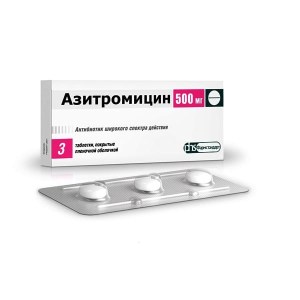

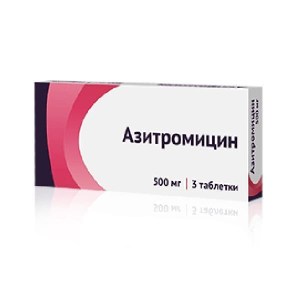

Description
Active ingredients: azithromycin
Manufacturer: See packaging
Country of origin: See packaging
Pharmacological group: Antibacterial — macrolide (azalide subclass)
Mechanism of action: Binds to the 50S ribosomal subunit, inhibiting protein synthesis in bacteria (bacteriostatic effect; bactericidal at high concentrations). Effective against Gram-positive, Gram-negative, intracellular pathogens and atypical bacteria.
Indications: Respiratory tract infections (pharyngitis, tonsillitis, sinusitis, bronchitis, atypical and community-acquired pneumonia); otitis media; skin and soft-tissue infections; Lyme disease (stage I — erythema migrans); urogenital infections caused by Chlamydia trachomatis, Mycoplasma, Ureaplasma; gastric and duodenal ulcers associated with Helicobacter pylori (in combination therapy).
Contraindications: Hypersensitivity to macrolides; severe hepatic or renal insufficiency; QT interval prolongation; concomitant use with ergotamine derivatives; children under 6 months (for suspension) or under 12 years/45 kg for tablet forms.
Side effects: Gastrointestinal: nausea, vomiting, diarrhoea, abdominal pain, transient transaminase elevation; cardiovascular: QT interval prolongation, arrhythmias; allergic reactions: rash, itching, Quincke's oedema; CNS: headache, dizziness; haematological: eosinophilia, neutropenia; audiological: reversible hearing impairment at high doses.
Dosage and administration: Adults orally 500 mg once daily for 3 days, or 500 mg on day 1 then 250 mg daily for days 2–5 (total 1.5 g). For urogenital chlamydiosis 1 g single dose. Children: 10 mg/kg on day 1 then 5 mg/kg for 4 days. The physician determines the exact dose and duration.
Storage conditions: Store in a dry place at a temperature not exceeding 25 °C. Keep out of the reach of children.
Disclaimer: This information is provided for educational purposes only and does not replace professional medical advice. Always consult a qualified physician before starting, changing or discontinuing any treatment. Self-medication may be dangerous. The attending physician determines the necessity of the drug, the dose, the route of administration and the duration of treatment based on the individual clinical situation. The manufacturer reserves the right to make changes to the package design and instructions. Before use, read the enclosed patient information leaflet carefully.